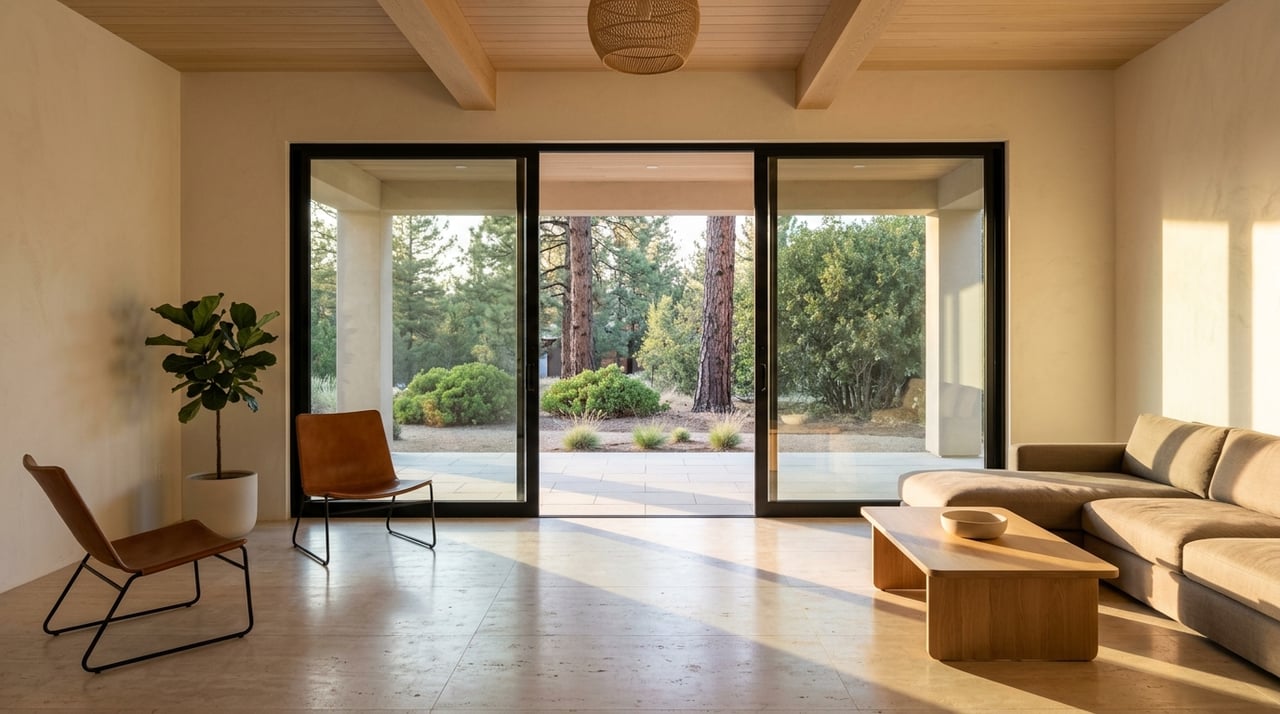
If you are thinking about buying in Forest Highlands as a second residence, you are not just buying a house. You are buying into a private, seasonal mountain-club lifestyle with its own costs, rhythms, and logistics. Understanding how the community works can help you decide whether it fits the way you actually plan to live, travel, and spend time in Flagstaff. Let’s dive in.
Forest Highlands works differently
Forest Highlands is a gated, member-owned private residential golf community in Flagstaff. According to the club, it spans 1,110 acres, includes 819 home sites, and is completely sold out. For you as a buyer, that means your search will be resale-driven rather than focused on new construction opportunities.
This is important because a second-home purchase here is less like buying in a typical subdivision and more like joining a private residential club environment. The community includes two championship golf courses, two clubhouses, dining, pools, a fitness center, racquet sports, hiking and biking trails, and family programming. If that lifestyle is the main draw, Forest Highlands can be a very compelling option.
The setting also shapes the experience. The community sits at roughly 7,000 feet in elevation in a pine-forest setting with a mountain resort feel. It is also about 2.5 miles from Flagstaff Pulliam Airport, and the club notes that planes can be seen and heard, though there are no red-eye or overnight flights.
Why second-home buyers choose it
For many buyers, the appeal of Forest Highlands starts with privacy, amenities, and a clear sense of place. Entry is controlled through a security gatehouse, there is no public access, and guests must be registered before entry. That setup can feel especially appealing if you want a more contained and managed second-home environment.
The membership structure also supports multigenerational use. The club states that memberships include the primary member, spouse, children, and grandchildren under age 25. If you picture a summer home where extended family gathers, that can be a meaningful part of the value.
Just as important, the community is built around recreation and seasonal leisure. Rather than treating the property as only a place to sleep, many second-home owners are buying access to how they want their time to feel when they are in Flagstaff.
Seasonality matters more than many buyers expect
One of the biggest things to understand is that Forest Highlands has a strong seasonal rhythm. The club says the summer season runs from May through October and is especially busy. The golf courses are open from the first weekend of May through the last weekend of October.
Winter is not inactive, but it is different. The Meadow Clubhouse shifts to weekend dining, and winter programming can include kids camps, craft nights, sledding, a cross-country ski trail, and shuttles to Arizona Snowbowl. The spa remains open year-round.
That seasonal pattern lines up with Flagstaff weather. The National Weather Service office in Flagstaff says the airport averages 90.1 inches of snow between October and May, with snow and ice affecting major routes like I-17 and I-40 in winter. In practical terms, this community may be a better fit if you plan to use your home heavily in summer and more selectively in winter.
Cost planning beyond the purchase price
When you buy a second residence in Forest Highlands, it is important to budget for more than the home itself. The club says Regular Membership is attached to the property and transfers to the new owner at closing. For 2026, the official fees listed by the club include a $115,750 New Owner Capital Contribution fee, a $3,000 membership transfer fee, and, if there is a home on the property, a $5,500 utility transfer fee.
You will also want to account for ongoing monthly dues. For 2026, regular monthly dues are listed at $1,525, which the club says includes HOA and full membership. That monthly amount is broken into $1,280 in operations dues and $245 for the capital reserve fund.
The club also states that dues increases are approved through the board budget process, cannot exceed 20 percent over the prior year, and have averaged about 5 percent annually over the past 35 years. There are no dining minimums, no service fee, and no tipping required. That can make the ongoing cost structure more predictable than buyers sometimes expect in private club communities.
A quick look at ownership costs
| Cost category | What to know |
|---|---|
| New owner capital contribution | $115,750 for 2026, per club FAQ |
| Membership transfer fee | $3,000 |
| Utility transfer fee | $5,500 if a home is on the property |
| Monthly dues | $1,525 for 2026, including HOA and membership |
| Utilities | Water, sewer, and trash billed separately through Forest Highlands Public Works |
Beyond dues, utilities deserve extra attention for remote owners. The association owns and maintains the roads, clubhouses, golf courses, and common areas. The club also states it owns Forest Highlands Water, which manages 10 wells plus the water and wastewater facilities and equipment serving the community.
Water, sewer, and trash are handled through Forest Highlands Public Works on a separate utility bill. The club also notes that homes use a pressurized sewer system with grinder pumps. If you are used to a more conventional suburban utility setup, this is worth understanding during due diligence.
Taxes for a second residence
Property taxes in Coconino County are not based on one simple headline rate. The county’s FY2026 adopted tax rate worksheet shows a countywide primary levy of 0.4830 per $100 of valuation, while the City of Flagstaff line items include a 0.6045 primary levy and 0.8000 bond debt service levy per $100 of valuation. School district and special district levies can also apply, so your actual tax bill depends on the parcel’s full taxing jurisdiction.
The county assessor also notes that Limited Property Value is the value used to calculate property taxes. That matters if you are estimating long-term carrying costs on a second home.
You should also be careful about assuming you will qualify for any primary-residence tax relief. Coconino County’s Senior Value Protection Option requires the property to be your primary property and requires at least two years of residency. A second residence would not qualify for that program.
Renting out your Forest Highlands home
Some second-home buyers want the option to rent when they are not using the property. If that is part of your plan, you will need to look at both city rules and community restrictions. The City of Flagstaff defines a short-term rental as a legally permitted dwelling unit rented for fewer than 30 consecutive days.
The city requires owners to obtain a short-term rental license, maintain a Transaction Privilege Tax license, complete neighbor notification, and renew annually. The current city license fee is $185. The city also states that effective July 1, 2026, the annual fee increases to $250 and new requirements include at least $500,000 in liability insurance and background-check compliance.
Just as important, the city states that it does not enforce HOA rules. So if you are considering rental income, you would still need to confirm what Forest Highlands covenants and community rules allow before you buy.
Remote ownership takes planning
A second home in a mountain setting usually needs a more thoughtful management plan than a lock-and-leave property in a mild climate. Flagstaff winters can bring snow and ice, and major roads can be affected. If you will not be there full-time, you should think through how the property will be checked, how snow will be managed, and who will respond if weather creates access issues.
Wildfire preparedness also matters. City guidance describes wildfire readiness as an ongoing homeowner responsibility and recommends home hardening. The city also notes that higher fire-restriction stages can prohibit charcoal and wood-fueled devices and can require open-flame devices to be disabled or locked.
The city further says that egress paths must remain clear, including of snow and ice. For a second-home owner, that means the practical side of ownership matters almost as much as the lifestyle side. A beautiful home is only part of the decision. Your plan for caring for it while vacant matters too.
Is Forest Highlands a good second-home fit?
Forest Highlands can make a lot of sense if you want a private, amenity-rich mountain retreat and you expect to use it the way the community is designed to be used. It tends to fit buyers who want strong summer use, family-centered recreation, club access, and a more structured residential environment.
It may be less ideal if you want a casual low-cost cabin, year-round predictability without weather interruptions, or a property you assume will function like a simple investment rental. Because the community is sold out and membership is tied closely to ownership, your purchase decision should be made with both lifestyle and carrying costs in mind.
The best second-home purchases are the ones that match your real habits, not just your wish list. If Forest Highlands fits how you travel, host family, and spend your time, it can be a very special place to own.
If you are weighing a second-home purchase in Flagstaff and want a clear, high-touch perspective on the numbers, lifestyle fit, and resale realities, connect with Billie Drury for thoughtful guidance tailored to your goals.
FAQs
What makes Forest Highlands different from a typical second-home neighborhood?
- Forest Highlands is a gated, member-owned private residential golf community with club-based amenities, transferred membership, and a resale-only market because the community is sold out.
What are the 2026 membership-related costs for buying a Forest Highlands home?
- According to the club FAQ, buyers should expect a $115,750 New Owner Capital Contribution fee, a $3,000 membership transfer fee, a $5,500 utility transfer fee if there is a home on the property, and regular monthly dues of $1,525.
What is the seasonal lifestyle like in Forest Highlands?
- The club says the busiest season is May through October, golf runs from early May through late October, and winter shifts toward weekend dining and seasonal recreation such as sledding, ski access support, and family activities.
What should second-home buyers know about winter conditions in Flagstaff?
- The National Weather Service office in Flagstaff says the airport averages 90.1 inches of snow between October and May, and snow and ice can affect major travel routes like I-17 and I-40.
Can you use a Forest Highlands property as a short-term rental?
- You would need to confirm both City of Flagstaff licensing requirements and Forest Highlands community rules, since the city requires short-term rental licensing and states it does not enforce HOA restrictions.
Do second-home owners qualify for Coconino County primary-residence tax relief programs?
- No. The county’s Senior Value Protection Option requires the home to be your primary property and requires at least two years of residency, so a second residence would not qualify.